

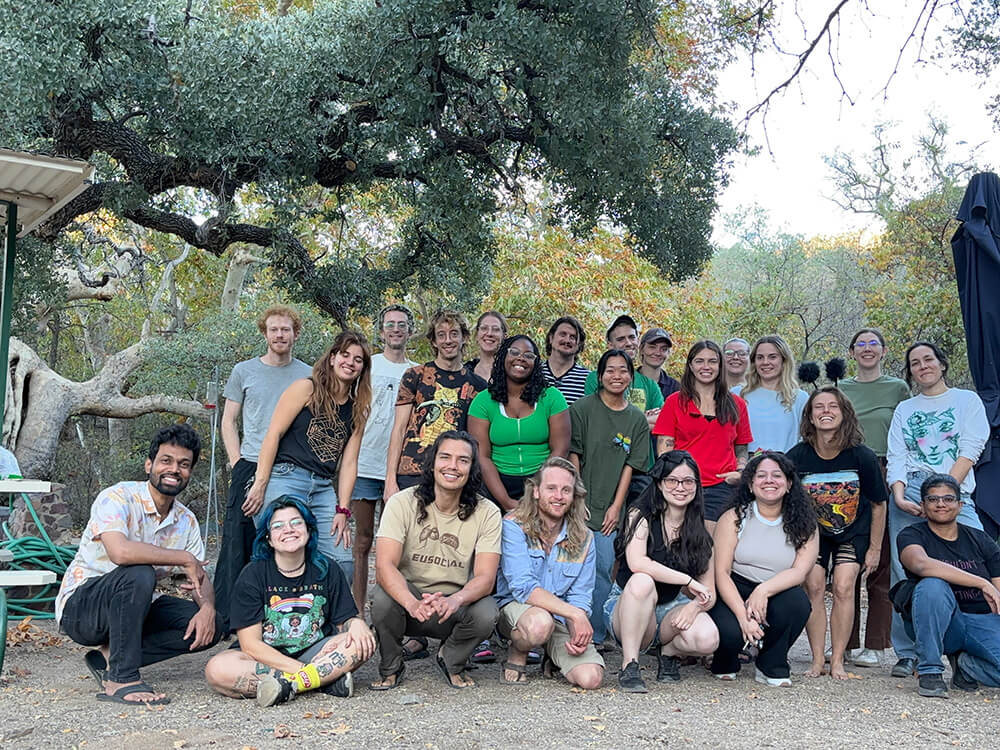
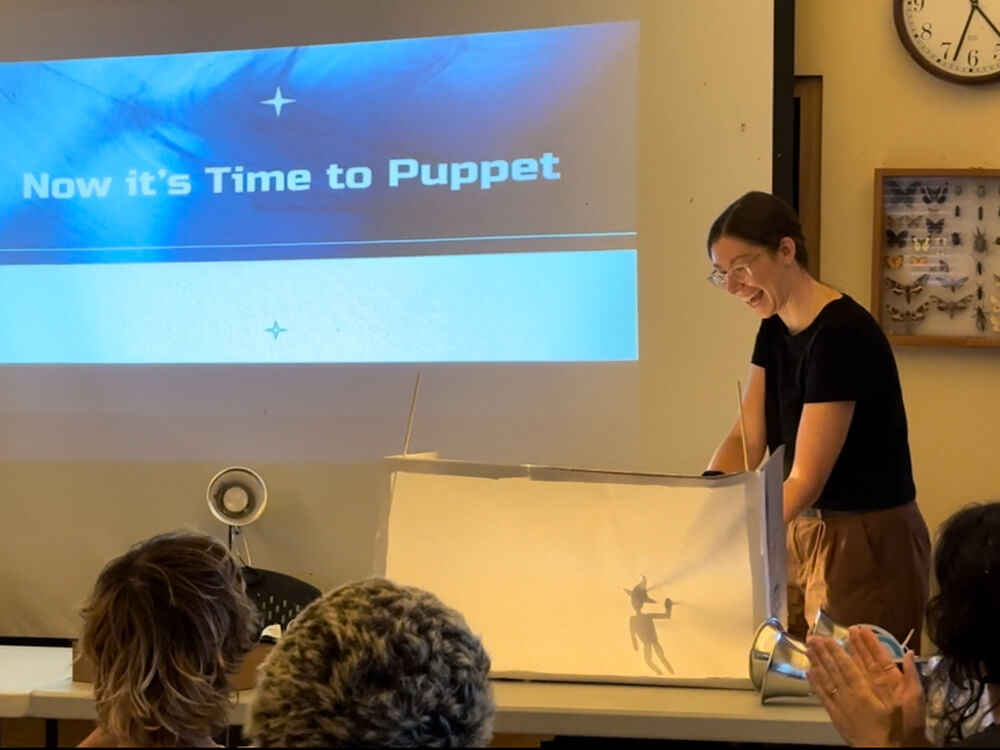
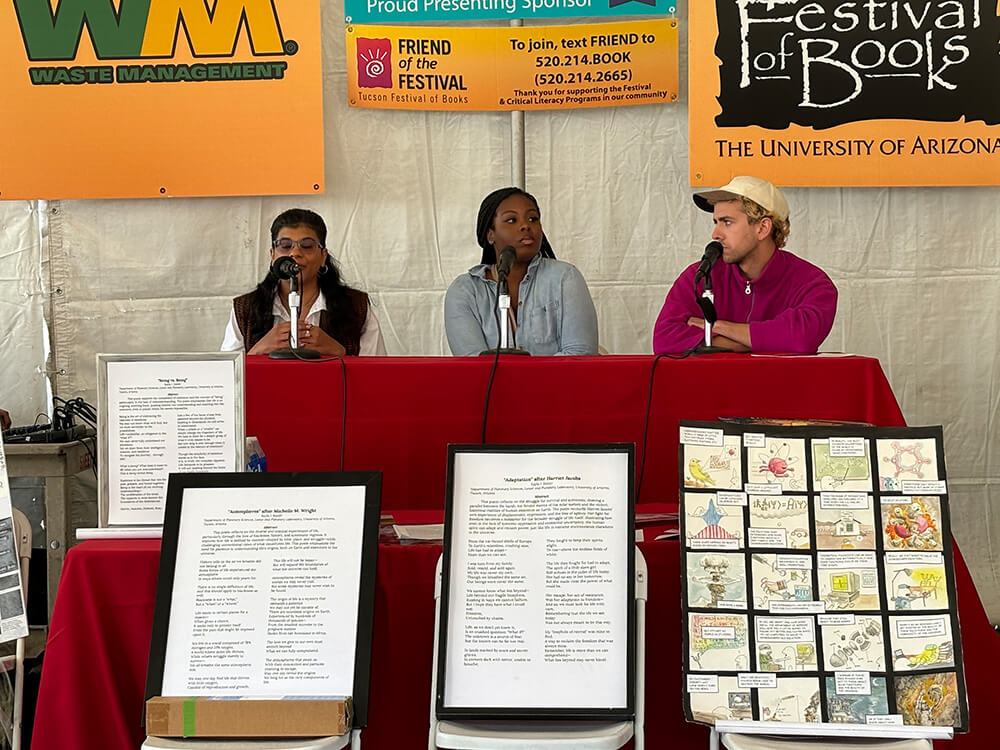
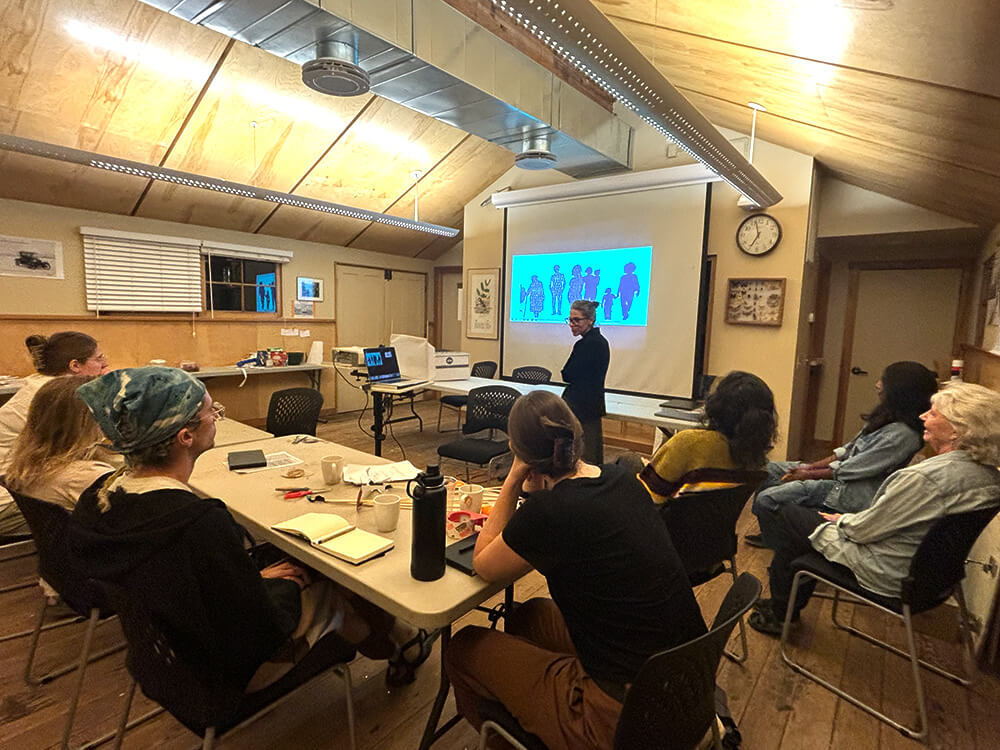
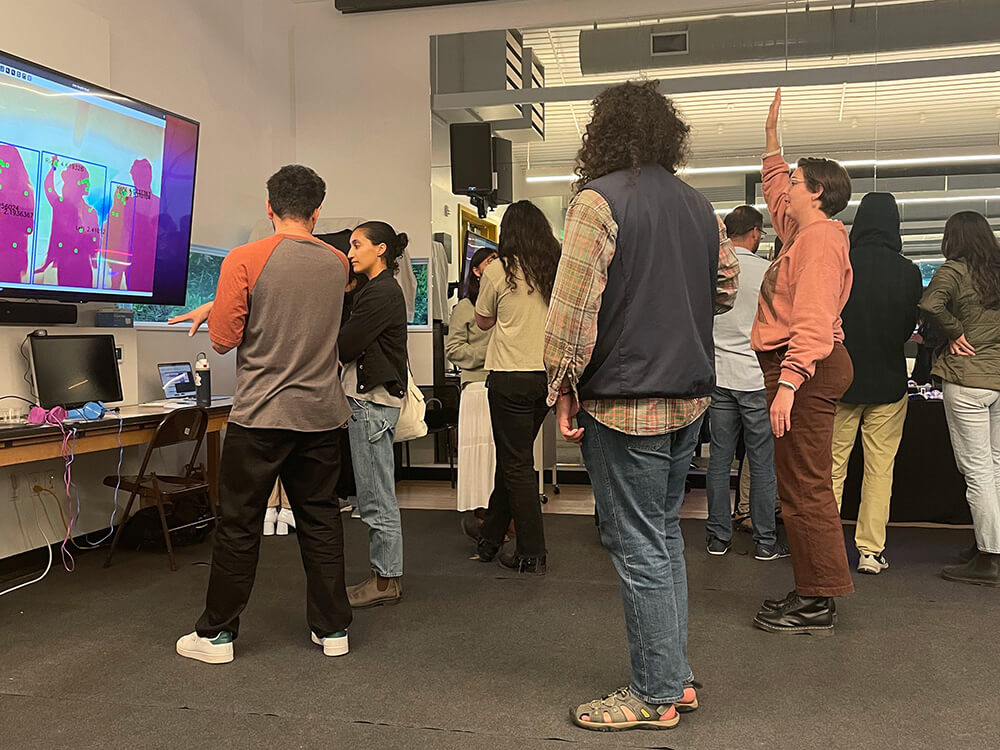
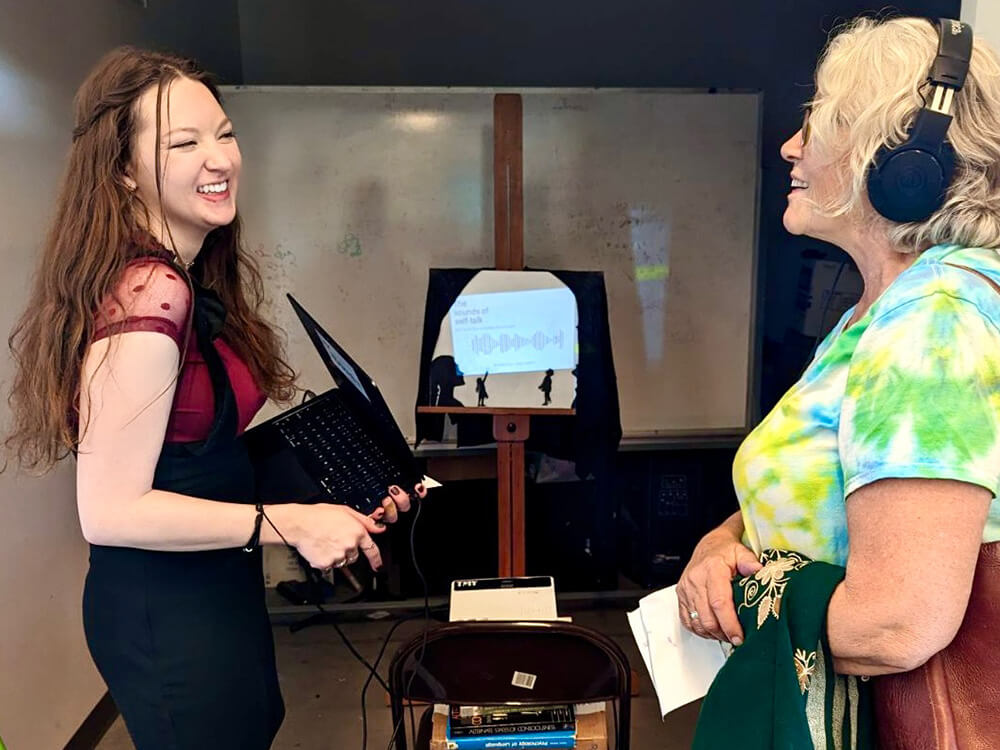
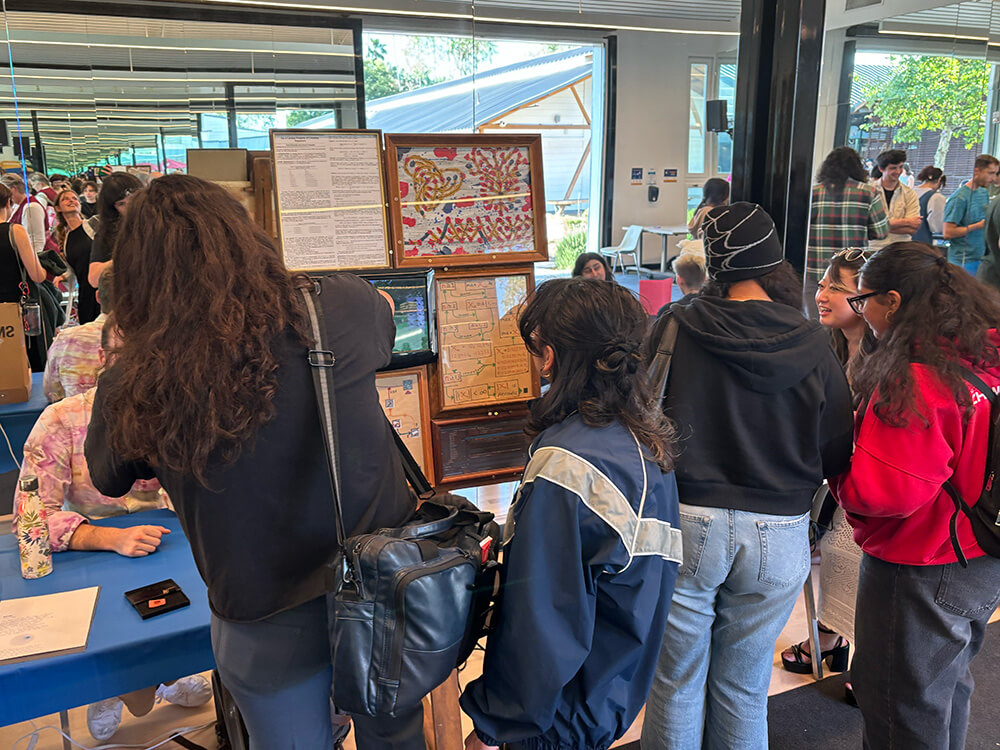
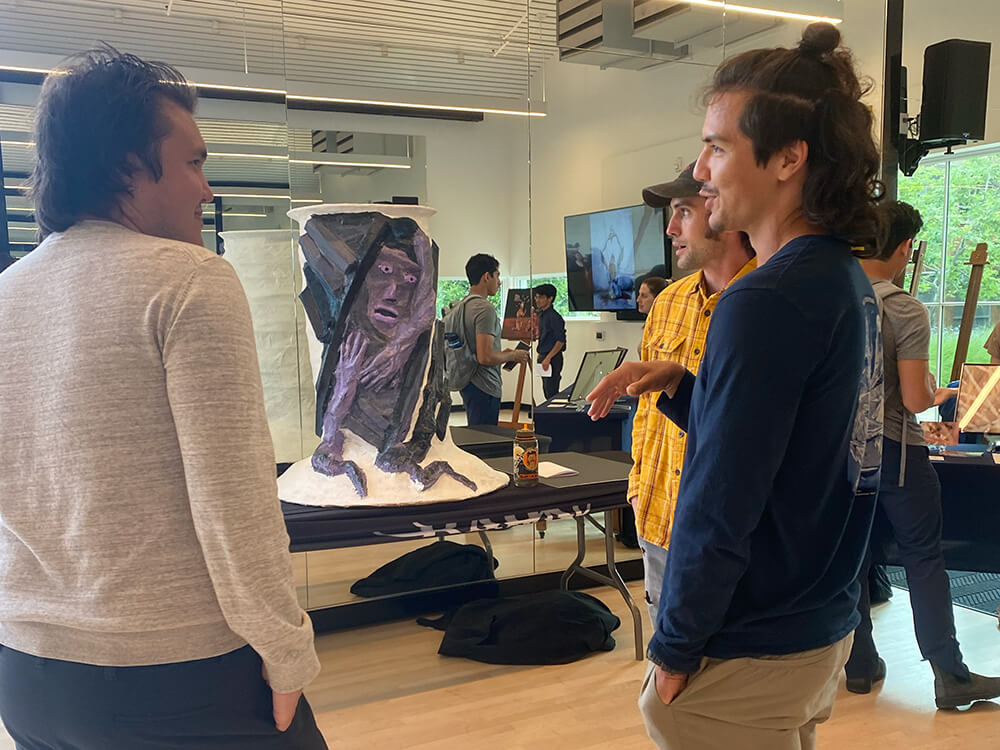
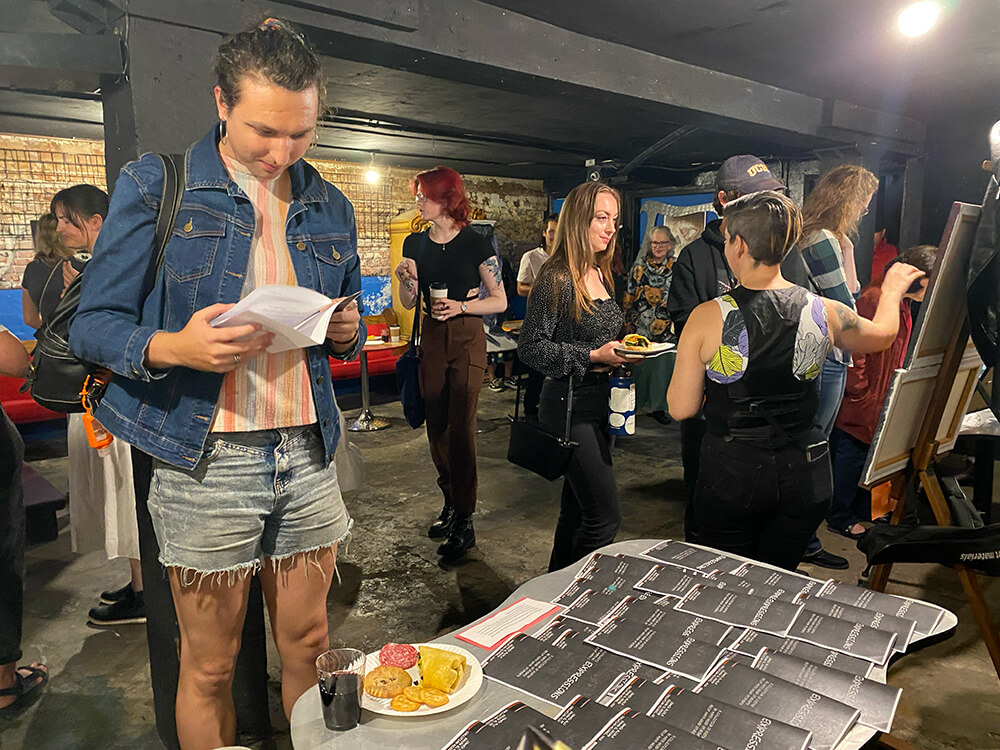

“Artistic Expression Of Original Research” (AEOR) is a program that lies at the intersection of science, art, outreach and trans-disciplinary collaboration and community building. The program guides graduate students across STEM disciplines to transform their original scientific research into art pieces that they show to community members in final exhibitions. The program begins with a three day retreat where STEM graduate students and arts graduate students or local artists engage with various artistic techniques and ways of knowing. In 2024, the artists led workshops across mediums from poetry, animation, dance, performance art, screenprinting, illustration, music, puppetry, sculpting, and more. The retreat served as a space to co-incubate ideas between disciplines and brainstorm the STEM graduate students’ final exhibition idea. In the 1-2 months following the retreat, the STEM graduate students each created their own art pieces that convey their data or research concepts. Then they present the original art pieces in local exhibitions (on and off campus) in a format similar to a poster session at an academic conference. This program was run at University of California and at University of Arizona between 2023-2025, for a total of 4 times featuring 9 exhibitions.
Maccaro and collaborators assessed the impact of AEOR on the final exhibition audience through pre and post surveys among exhibition visitors to measure changes in visitors’ relationship to science and scientists. They also looked at how the exhibition made people feel and took social connection measurements. They found significant increases in scientific awareness, interest, relevance, learning, understanding, and comfort talking with scientists. These impacts disproportionately benefited people less involved in/marginalized in science, such as LGBTQ+ folks, women, and people who don’t work in research or science. All visitors created meaning, made strong social connections, felt positive emotions, and a sense of community through the exhibit.
Resources to learn more
“Artistic Expression of Original Research: Art based science communication improves the public’s relationship to science and scientists,” Frontiers in Communications.
Exhibition brings together science, art and community building story on arts.arizona.edu.
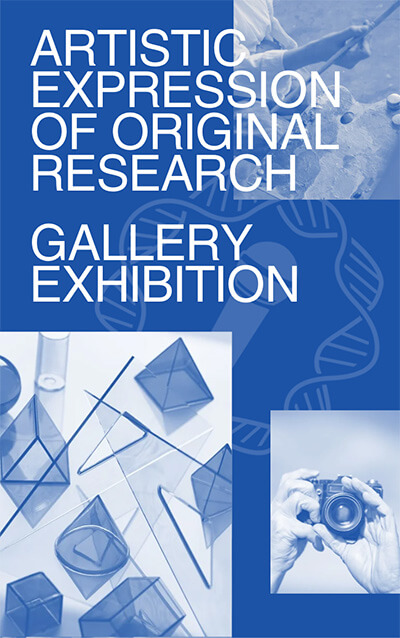
Examples of pieces generated from the program, see the digital programs from the last three rounds:
Email Maccaro at j.joy.maccaro@gmail.com if you’d like to talk more about starting a program like this at your university or community.
What did community members say about the exhibitions:
Many participants valued the interpersonal connections built between themselves and the science-artists as a result of the interactive nature of the exhibition:
“I feel thankful for the exposure. Got to meet a lot of awesome people working on so many different things willing to share.”
“I liked seeing the art and having the artists [artist-scientists] there to talk about their work – felt like this helped me appreciate work and understand science”
“Having the artists there to talk to was great. I rarely talk to strangers but I had some really interesting/abstract convos.”
Another common response from participants highlighted how synergistic and impactful science and art can be when combined. These highlight the importance of a cross-disciplinary approach to science communication and collaboration more broadly. Specifically, when science and art work together, there is an increase in the community’s appreciation and understanding of both fields:
“This made me have more of an appreciation for art & science”
“Happy! I love the connection between art, science, and learning!”
“I loved the idea of combining art and science, and finding the similarities”
Some people explicitly stated the similarities between art and science and some decried the rigid boundaries between the two fields:
“Absolutely loved the bridge between art and science. As a middle school science teacher I feel like this exhibit reminds me of my own understanding of higher level science concepts as story, imagery, feeling and the best way to share it.”
“I love the show, truly. I do feel a separation/bifurcation that, for me, is questionable, dueling that there’s no separation between nature X culture/ masculine x feminine / space x time/ mind/body etc. I do think we need to start to see science as NOT a given truth, but an art that we build, construct, and believe – until its evolution to another thing.”
Several people indicated that they were most emotionally moved when artists made their science culturally relevant. Many felt that the socio-political contextualization of science left them with a profound feeling for the importance and relevance of science:
“At times extremely emotional, especially when people used science to extend into issues like war + minority experiences”
“I loved to see everyone’s interpretation of how their research are relevant”
“I loved talking to the artists about their interpretations of their art and all the connections they could make between art and multiple subjects! It was amazing. I hope to see more!”
Many visitors felt hopeful about the future and the impact of art and science to create social change:
“Many of these ideas can change the world and allow us to see things differently.”
“It made me feel like we can together work toward improvement”
“Being here was like being at the beach for a sunset: awe inspiring, hopeful, exciting, comforting.”
Many participants reported feeling inspired and empowered to continue after the event learning or applying concepts they learned at the event:
“Welcomed, curious, and with some ideas to do after”
“extremely engaged, and excited to learn more about everything”
“Invigorated! I want to learn more about science and make more art.”
Several people indicated that their favorite aspect was the feeling of community and their own identification with the science-art community in their responses:
“Like a part of a community I missed out on”
“Inspired, Intrigued & Appreciative of my campus community”
“It’s so cool to be part of this community! Art was beautiful. I enjoyed!”
The community members reported feeling welcomed into the space which promoted engagement, learning and open conversation:
“my questions were welcomed, nobody made me feel ignorant.”
“Lucky! I just walked by and felt so welcomed to come in and talk with the artists about broad topics I have no experience with.”
“Included, looking at science with new eyes, in a pretty way”
Several comments reveal inclusion of community members in the process of science:
“I felt part of the scientific process”
“Loved getting to interact with the artists and hear from them how the art ties to the research they are actively conducting. The longer, more fluid discussions were super rewarding and drove a lot of ideas.”
“I wish information about science was presented this kind of way more often, permitting us (in the community) to visualize it and speak to the researchers.”
Several community members who are scientists felt proud and a feeling of belonging when they saw other intersectional scientists:
“I felt as though I found myself with a group as passionate about the intersection of science and art as I am.”
“Valued as a scientist and artist”
“I really felt the dynamicity between art and science and being a lover of both, I felt represented and intrigued.”
Several people indicated that the artistic medium of science communication made science easier to understand:
“Made difficult concepts more understandable”
“I felt like it was easier to understand what the students are working on even though I had already been presented with some of the information. This just made it easier to take in.”
“I loved that the art was engaging and allowed me to understand the concepts easier.”
Some people explicitly compared this exhibition to other common scientific learning environments:
“So much more accessible (fun, cool, engaging, etc.) than academic journals”
“I love the creativity in presenting science because scientists are typically very constrained by conventional reporting methods.”
“This was great! I really appreciated the visualizations. I am a visual learner and my eyes glaze over when I have to read articles.”
Many people discussed the diversity of the pieces media, content, and presenters as something they liked the most about the exhibition:
“I loved how all of the artists were there to explain their work and especially how diverse the mediums used were. It was cool being able to look through their creative methods of presentation!”
“I liked the diversity and variety of all the art and people here! The vibes were amazing!”
“Loved that there were so many different types of art and diverse perspectives showcased!”
The creativity of the artist-scientists was highlighted by community members:
“I enjoyed seeing how scientists engaged with their research in a creative way. All had unique approaches to convey the topics.”
“I like the creativity of the artists, every single one I went to had their own unique style and very interesting research.”
“very creative and unique art across a wide variety of scientific disciplines and media. Very interactive and engaging conversation & interaction.”